
5 Simple Musical Instrument Games for Kids to Play at Home
Simple sounds, shared turns, and a little music together.
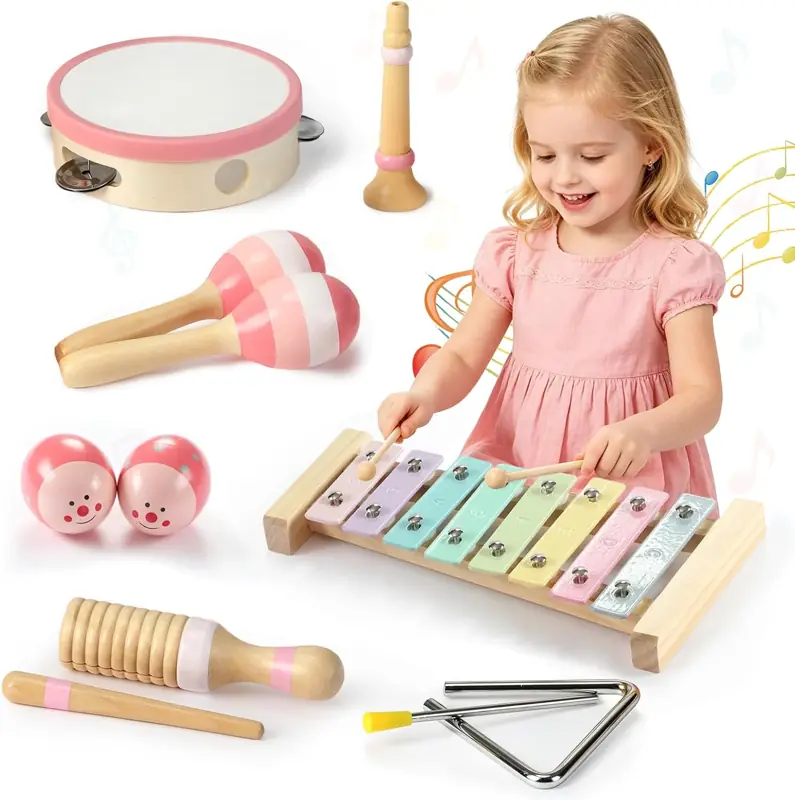
A few instruments and one familiar song are enough for a playful music break. You do not need a lesson plan—or a room full of toys. Try one of these five games, then follow your child’s lead.
These activities are for children aged 3 and up using instruments appropriate for their age. Stay nearby, follow the product instructions, and use gentle sounds. Stop if your child seems uncomfortable or wants a break.
1. Copy my rhythm
Choose a shaker or maraca. Make two slow shakes, then pause and invite your child to copy you. Keep the first pattern short: shake, shake, stop.
Once you have tried a few turns, switch leaders. Let your child invent a pattern and you copy it—even if the rhythm changes halfway through. The aim is taking turns, not getting every beat right.
2. Play and freeze
Agree on a clear cue: “Play” means make a sound; “Freeze” means rest the instrument in your lap. Begin slowly so everyone understands the game.
Use your voice for the cues rather than making the sounds louder. Change the length of the pauses, or let your child call the next cue. Leave plenty of space between players so instruments stay away from faces.
3. Make a sound story
Tell a tiny story and choose a sound for each part. A few soft taps might be footsteps. A gentle shake could be rain. A single tap can signal that the sun has come out.
Ask, “What happens next?” Your child can add an animal, a bus or a favorite character. There is no correct soundtrack. If an instrument is too loud for the moment, use a quiet hand movement instead.
4. Pick a song and take turns
Sing a short song your family already knows. One person plays during the first line, and the other plays during the next. Start with just one instrument each so it is easy to hear whose turn it is.
For another version, one person sings while the other adds a few gentle taps, then swap. You can stop after one verse; a short, enjoyable round is enough.
5. Build a two-person band
Choose two contrasting sounds, such as a shaker and a xylophone. One player makes a slow, steady sound while the other adds a simple pattern. Then trade roles.
If playing together feels too busy, return to call-and-response: you play, pause, and your child replies. Invite another family member only when everyone has enough space and wants to join.
Keep the setup simple
- Offer one or two instruments at a time rather than emptying the whole set.
- Choose a clear play area and keep instruments away from ears and faces.
- Check pieces before play; set aside anything loose, cracked or damaged.
- Finish by putting the instruments away together, following the storage instructions.
Questions parents often ask
Do I need to know how to play music?
No. You can lead these games with simple sounds, pauses and a song you already know. They are ideas for shared play, not formal music instruction.
How long should a music game last?
Start with one brief round. Continue while your child is interested, and stop when they want to do something else. There is no required practice time.
What if my child only wants to shake one instrument?
That is a perfectly workable starting point. Join in with the same action, take a turn, or add a pause. You do not need to use every piece.
Can we play quietly?
Try softer movements, fewer instruments and more pauses. If a sound is uncomfortable, stop using that instrument; these games do not require loud playing.
Explore the JOLLITO instrument set
The JOLLITO Musical Instrument Set includes a xylophone, tambourine, maracas and a storage bag, with an age range of 3 years and up. See the set, product details and our own demonstration video. You can check the current offer on Amazon from the product page.
Written by the JOLLITO brand team. Activity ideas are original editorial suggestions, not a claim of tested developmental benefits. Always follow the instructions supplied with your item.
Back to Blog